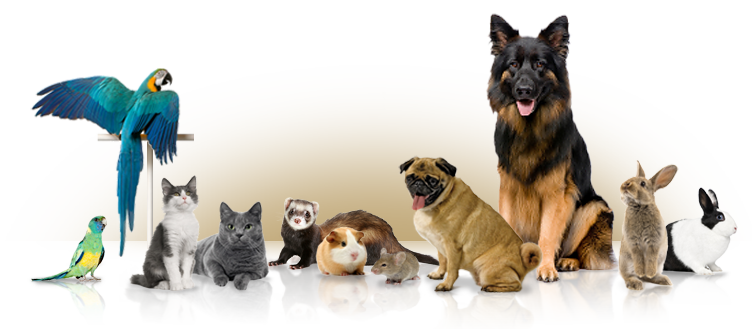
Dogs age at different rates compared to humans, but the simple rule of 7 dog years to 1 human year is far from accurate. If humans aged seven times slower than dogs, then many of us would be able to reproduce at age 7 and live to be 150. Obviously that's not the case. The reason that dogs can reach full sexual maturity after only a year is that our canine friends age faster during the first two years of their lives than humans do. Even this general statement is slightly off since smaller breeds tend to mature faster than larger breeds. Compared to humans, dogs age more quickly at the beginning of their lives and slower toward the end. Therefore, calculating your dog's age relative to yours is a bit tricky, but luckily it's possible. Since smaller breeds tend to live longer than larger breeds, it's important to calculate your dog's age according to the right category: small (20 pounds or less), medium (21-50 pounds), large (51-90 pounds), or giant (over 90 pounds).
Twice when I was a child, my parents surprised my brother and me with a pet. When I was 8, it was a puppy at Christmas. And when I was 13, a kitten, several months after a beloved cat had died. We always had a dog or a cat, or both, in the house, and those pets were completely woven into the fabric of our family life. The dogs went on vacations with us; the cats were a fixture at the foot of my bed, or firmly planted between my face and whatever book I was reading. We were devastated when they died. Of all of the pets that came and went, though, the two I remember most were the ones Mom and Dad sprung on us when we weren’t expecting it. Being a kid, I figured they had stopped somewhere on a whim and picked up the new animal on the way home. Now I know better. My husband and I surprised our own children with a kitten a few years ago, much to their delight. Just as my brother and I didn’t know how much planning went into my parents’ surprises, our kids didn’t know that we spent many evenings weighing the pros and cons of getting a cat. I had lived with cats my entire life, but I read “Cats for Dummies” and found out how much I didn’t know. (Cats have a pattern on their noses that is unique, just like a human fingerprint!) We visited the shelter and played with several animals before choosing one. Then we waited a week for our application to be approved, and for her to get spayed. There was a lot that went into her popping her little head out of a picnic basket one Saturday morning and worming her way into all of our hearts. The right pet in the right home can be one of the best experiences you can give your child. Pet ownership can teach a child about responsibility and unconditional love. But the wrong pet at the wrong time can lead to a heartbreaking disaster for everyone, including the animal. To read more on this story, click here:Choosing the Best Pet for Your Family
It turns out Bullards Alley's upset of the Grade 1 Canadian International last year was an anomaly. The race lived up to its name Saturday as Desert Encounter out-dueled Thundering Blue for a win in the $800,000 feature at Woodbine. Both the top contenders hail from Europe, with the winner stalking the runner-up throughout. Quite a stretch battle ensued as Thundering Blue, a flashy gray, looked best before chased down by Desert Encounter, who was sprinting on the outside. The final time for 12 furlongs on turf was 2:28.88. "I followed Thundering Blue all the way around," said jockey Andrea Atzeni. "I thought he was the horse to beat." It turns out he was, and now eight times in the last nine years the Canadian International has been won by an overseas entrant. To read more on this story, click here:Desert Encounter Wins The Battle In Canadian International
There has been a lot of news about pets on airline flights lately, so when Southwest Airlines recently updated their statement about traveling with animals, it didn't comes as much of a surprise. However, there was something in there that I wasn't expecting. From the statement. Southwest Airlines welcomes trained dogs, cats, and miniature horses as service animals onboard our flights as long as the Customer is able to provide credible verbal assurance that the animal is a trained service animal. Southwest Airlines does not accept unusual or exotic species of animals. Am I the last person to know that there are service miniature horses? (Let alone, service cats?) I mean, emotional support animals come in all shapes and sizes – peacocks, squirrels, you name it – but service animals are trained and actually act as guides. Horses are smart and seriously intuitive, but I didn't know they could take the place of dogs in, among other tasks, guiding the blind. Which led me down the research rabbit hole to discover that it all makes perfect sense. Here's why. (But first, meet Chunky Monkey, Fancy Dancer, Glitter Bug and Patty Cake.) To read more on this story, click here:Why Miniature Horses Make Such Great Service Animals
Have you ever wondered why huskies, border collies, and some shepherd dogs have those piercing blue eyes? Consumer genetics, made popular by companies like 23andMe and Ancestry, may have provided an answer, according to a new study conducted by researchers from the canine DNA startup company Embark Veterinary, Inc. The study was published in the journal PLOS Genetics and it’s the first of its kind to use consumer genomics with non-humans as well as the largest canine genome-wide association study ever conducted. Consumer genetic testing has given people an unprecedented look at their DNA and genetic history. This is all made possible thanks to large databases of genomic data, and now this new study shows how consumer genomics can shed light on animal traits that have yet eluded scientists, like the blue eyes of the Siberian Husky. To read more on this story, click here:What Gives Huskies Their Piercing Blue Eye Color?
Those who love animals find it hard to imagine why anyone would ever inflict pain on our furry friends. A judge named Michael (Mike) Cicconetti from Ohio is the proud owner of a beautiful Bernese mountain dog and an overall animal enthusiast. He is committed to helping end animal abuse and neglect in his community and has set about to combat the problem in an unexpected way. He uses his sentencing power as a judge to choose sentences that he hopes will help the abusers understand why their behavior is so harmful. His ultimate goal is to get these people to stop treating their pets in such heartless ways. For example, one local woman got in trouble with the law for allowing her dog to live in a filthy environment. She ended up in Judge Mike's courtroom. So when it came time for him to hand down her sentence, he decided to allow her to have a brief glimpse into what the poor pooch's life had been like under her abuse and neglect. He sentenced the woman to have to spend eight straight hours sitting in a stench-filled dump. To read more on this story, click here:This Clever Judge Turns The Tables On Animal Abusers With A Dose Of Their Own Medicine
Every animal in the world deserves respect and love, but if we’re plain honest, a lot of us humans are sort of scared of spiders, if not terrified. However, we recently learned that these animals might just be very misunderstood and also, they have tiny adorable paws! They’re fairly unnoticed by most people since we hadn’t dare look that close. But when you zoom into pictures of spiders and their very complicated legs – which do more than just carry them around – you’ll notice their tiny little paws. Perhaps it’ll take us humans some time to still fully embrace the hidden adorableness of spiders, but here’s a look at their paws – hey, we gotta start somewhere! To see the photos, click here:Spiders Actually Have Tiny Paws, And It Might Change The Way You Look At Them (13 Photos)
You’ve seen headlines like “Puppy Love: Pet Owners Are Happier, Healthier” and "How Pets Save Us Billions Every Year In Health Care Costs!" And it is true that a lot of studies have reported that pet owners have better physical and mental health than people who do not live with companion animals. But as I have pointed out in previous posts, the results of this body of research have been mixed (here and here). Further, we do not know whether getting a pet causes better health, or whether the causal arrow points in the other direction. In other words, pet owners might be different to begin with. If so, non-pet-related differences such as socioeconomic status might be the real cause of better health for companion animal owners. For example, people who are married, white, female, and wealthy have lower death rates. If individuals with these characteristics are also more likely to live with pets, we could wrongly conclude that it is dog or cat ownership that makes them live longer. If we really want to understand the effects of companion animals on human health, we also need to know how pet owners and non-pet owners differ in terms of demographics. Investigators from the Rand Corporation and UCLA used a large data set to address this question. Recently published in the journal PLOS One, their research report offers important insights into the differences between pet owners and non-pet owners and the impact of pets on our health. To read more on this story, click here: Large Study Finds Pet Owners Are Different