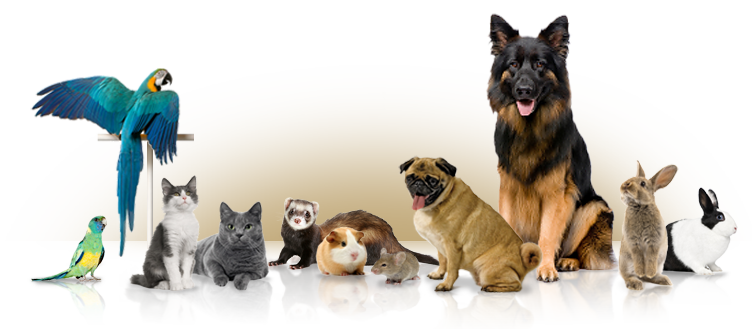
Are you thinking about getting a pet hamster for you or a child? Be prepared with knowing how to choose a hamster, what supplies you need, and how to feed and care for your new pet. Before you go to the pet store, learn how to provide a good home for a happy and healthy hamster. Choosing a Pet Hamster Hamsters are popular pets for children. They are small rodents that typically live about two years and are usually best if housed alone. Hamsters come in a variety of colors and breeds. Different breeds are known for distinctive traits. Learn about the choices before picking one out to take home: Chinese Hamsters: These small hamsters are not as common as other kinds of hamsters. Many people often mistake them for dwarf hamsters. Dwarf Hamsters: There are several varieties of dwarf hamsters, such as Roborovskis and Russians, and they're similar to Chinese hamsters. Syrian Hamsters: Syrian hamsters come in several color variations and go by different names, such as goldens and teddy bears. Make Sure the Hamster You Choose Is Healthy Not every hamster in the pet store is of optimal health. Moving from supplier to store to a new home can be a stressful period for baby hamsters, and they will often get sick from it. Learn how to choose a healthy hamster and what to watch for after you take it home. Young hamsters are best for taming since they will most likely be friendlier from the get-go. Choose an active hamster and one that doesn't look like he has a wet rear end or watery eyes. If a cage seems to have a few sick hamsters, it is probably best to avoid buying any hamster from that group since hamster diseases are very contagious. To read more on this story, click here:All About Keeping Hamsters as Pets
Does your cat sometimes fling litter out of her box like party confetti? If so, there are usually some very simple reasons why.
Let’s consider normal feline elimination behavior. When cats eliminate in the litterbox, they typically follow a certain behavior pattern. First, they may inspect the litter material. Next, they may dig a shallow depression. Then, they eliminate. Afterward, some cats may try tocover their deposits. This is when they tend to get enthusiastic about the job and throw litter all around the box — and sometimes even outside the box.
If the sides of the litterbox are low, it is common sense that litter material may get “kicked” out of the container. The standard litterboxes we provide for our cats do not always take into account the full extent of a cat’s behavior when eliminating.
Think Outside the Box
Wild cats exhibit the same behaviors as pet cats, but they do not have to deal with the constraints of alitterbox. I used to study feral cat behavior and observed numerous cats as they went about their business eliminating on a dairy farm. On the farm, where the cats were exposed to many “litter” substrates, they tended to dig in the finer substrates, such as sand and dirt, but they did not do this in grass or gravel. They were also able to fully extend their legs to rake the desired substrate, which they are usually unable to do in commercial litterboxes. Cats tend to spend more time manipulating the substrate they prefer.
Size and Height Matters
If your cat always kicks litter out of his litterbox, consider getting one with higher sides. Or you can make your cat a larger litterbox by using a large plastic storage box with high sides (the ones I use are about 12 inches high) and cutting an opening in one side to allow easy access. This is also a good option for a cat who has joint problems or other mobility issues — just make sure there are no sharp cut edges that could cause injury.
Some cats may also need a transition period, so leave the old box next to the new for one to two weeks, until you see the cat using the new box more frequently. Then you can remove the old box. You should also try to pick a box that is at least one and a half times the length of your cat from the tip of her nose to the base of her tail. Most traditional litterboxes are much smaller, so it’s no wonder if your cat is tossing some litter over the side.
We’re all familiar with the classic doggie play bow, the unmistakable invitation to play that dogs use with other dogs and humans alike, and even other species. When I first adopted her, my young Rottweiler play bowed to one of my chickens (the hen was very confused and clucked nervously), and she still play bows with my sheep frequently. But what about some of the other behaviors we see when dogs are playing with one another, like bared teeth, growling and nipping? We’re all familiar with the classic doggie play bow, the unmistakable invitation to play that dogs use with other dogs and humans alike, and even other species. When I first adopted her, my young Rottweiler play bowed to one of my chickens (the hen was very confused and clucked nervously), and she still play bows with my sheep frequently. But what about some of the other behaviors we see when dogs are playing with one another, like bared teeth, growling and nipping? To read more on this story, click here:Is My Dog Fighting or Playing?: How to Tell the Difference
Dog goes woof, cat goes meow... and this little goat says 'what, what?' Dusty Belew from Tennessee recorded his talkative kid in action, bleating out the phrase in a human-like voice. Instead of the standard 'baaa', the young animal repeats the word 'what' over and over. When Mr. Belew instructs the kid to say it 'louder', the volume increases. Then at the end of the recording the goat even bleats out a 'bye.' His video has scored more than 4,000 hits on YouTube.
No one likes to think about their cat getting sick or contracting a disease, but unfortunately there are many diseases your cat could contract. It is important for you to be informed, understand what signs and symptoms to look for, and most importantly how you can prevent your cat from contracting certain avoidable diseases. We’ve compiled information regarding some of the most common feline diseases. You can learn about prevention, signs and symptoms, how your cat could contract this disease, and treatment options. To read more on this story, click here:Feline Disease and Medical Conditions
Dreams do come true. This time is it MUTTS Canine Cantina that is turning fantasy into reality. The Texas-based bar and restaurant, which has two locations, is all about dining out with your dog in a way that is fun for both of you. With a membership to MUTTS, dog moms and dads can drop their canines off at the off-leash dog park attached to the restaurant while they get a meal or drink and watch from the patio. Owners can also join their dogs in the park or have their pooches sit with them for a bite. To keep their canine and human customers happy, MUTTS is looking for their first ever “puptern” for its Dallas-Fort Worth location. The title should be enough to get dog lovers squealing. The sole duty of the soon-to-be puptern is to play with dogs all day. That’s it. Not only is MUTTS offering a fall internship with serious puppy perks, the restaurant is planning to pay handsomely for this pleasure. MUTTS’ puptern will be paid $100 an hour to greet members, offer to play with their dogs while they dine and then play with said dogs. How is this real life? To read more on this story, click here:This Dog-Friendly Restaurant Wants to Pay You $100 an Hour to Play with Dogs
Pet Primates The worst kinds of animals to keep as pets are the ones that endanger human lives and that cannot survive outside of the wild, but that doesn't stop some people. Check out some of the worst kinds of animals to keep as pets and why there are better options. Lemurs, capuchins, chimpanzees, and baboons all fall into the primate category. They are cute and “childlike” but are not a substitute for human babies. Sure, they are often treated like babies by their owners putting them in diapers and strollers but they also act like babies, permanently, with all the messes and screaming included. The biggest problem with pet monkeys is that they may go on a rampage without warning since they have no moral conscience. They may also bite their owners which is something the health department doesn't like. This is especially scary given the fact that they can transmit diseases like Hepatitis A and HIV-1, the virus that causes AIDS. To read more on this story, click here:Top 10 Animals That Do Not Make Good Pets
Don’t be fooled by the off the scale cuteness. This is not a kitten. This is an adult Sand Cat – or Felis margarita, a little known species of desert cat. In the wild it lives in areas that are too hot and dry for any other cat- the deserts of Africa and Asia, including the Sahara. It is the only desert species of cat known to us. As such, this cat is one tough cookie. It also lives in the Arabian desert and those of Iran and Pakistan, yet despite being so widespread it was not described by a European until 1858. To an extent the sand cat could be mistaken for a domestic cat but there are differences, noticeably the very broad head. Additionally the ears are much wider apart than they are in the domestic cat – a feature which means that the sand cat can flatten them horizontally when hunting. They are a little larger, growing up to ten centimeters longer in length than the domestic cat, with a span of up to sixty centimeters. Likewise with their height – they usually grow to about six centimeters taller than the domestic cat. Their sandy yellow fur sets them further apart, as do the pale bars which can be found on their legs and backs. Perhaps what adds to their attractiveness is the white chin and underside and the pale red stripes which run over the cheeks from the eyes. One difference from the cats that we know which is difficult to see in these pictures is the fur that the cats have between their toes. You might think that the last thing a desert living cat might need is more fur but this helps to insulate them against the piping hot sand over which they must stalk their prey. They also have fur on their footpads which makes it very difficult to hunt as the fur misshapes their tracks. The hollow structure that encloses part of their middle and inner ear, their auditory bullae, are also larger than those of the domestic cat. This helps to enhance their hearing and with it they can pick up vibrations in the sand. Finally their mucosa (the membrane around their eyelids) is a conspicuous black which gives them a certain eyeliner look. So desolate is their natural habitat that sometimes the sand cat can go for months without a drink of water. Instead, they survive off the water in their food, which is mostly rodents but they will also eat birds, lizards and insects. They will not live in sand dunes themselves but prefer flat or rolling terrain's, retreating to their burrows when it becomes too hot even for them. As they mostly eat rodents, they do a lot of digging. Skulking close to the ground they use their extremely sensitive hearing to detect the sound of burrowing underneath them. When they hear something which corresponds to a meal they dig down to catch their prey. Despite the fact they are not terribly social and only really get together for mating they do not defend territory. They have even been observed taking turns sharing burrows. One cat will leave and hunt while another stays behind and rests. When the first returns, the other will leave. As well as their obvious enemy, us, the sand cat is not at the top of its own particular food chain. It is predated by wolves and even occasionally by snakes and large birds of prey. Yet they are fearless creatures, and are obliviously unafraid of humans when they come in to contact with us. Hunting the sand cat is prohibited only in half the countries in its range, though it is hoped that this law will soon extend throughout its territories. It has even recently been reintroduced in to the wild in Israel where it had been previously extirpated. It remains one of the least known but beautiful cat species on the planet. For more information on Sand Cats, visit:Sand Cat - Facts, Info & Photos