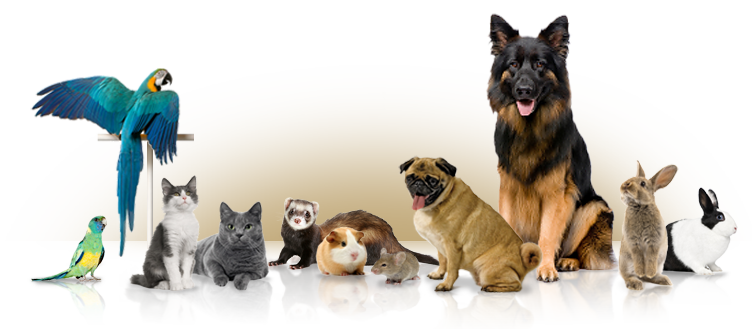
Washington, DC - An annual tradition continues as the DC Walk for the Animals takes place on Sunday, September 18th at the Capitol Riverfront. The event includes a one mile walk around the Capitol Riverfront area, admission to Pet-a-palooza and, for the first time, admission to “Barktoberfest” – all to raise money to benefit the 60,000 animals cared for by the Washington Humane Society-Washington Animal Rescue League. WHAT: DC Walk for the Animals WHEN: Sunday, September 18, 2016 TIME: 11:00 AM - 3:00 PM WHERE: Capitol Riverfront Corner of M St SE & First St SE (across from the Navy Yard Metro Station and adjacent to Nats Park) Look for our mobile adoption center - Adopt Force One
EVENT: This event includes admission to Pet-A-Palooza and Barktoberfest all for one ticket price! PRICE: $35 The entry fee is $35 for walkers, $20 for those under 21, and includes a t-shirt and gift bag and admission to Pet-a-palooza and Barktoberfest. Walkers are encouraged reach out to friends and family to raise at least $125 to help the animals cared for by WHS-WARL (this is a suggested goal; there is not a fundraising requirement for the event). This year’s DC Walk for the Animals has something for everyone! Come out and participate in the walk, enjoy vendor booths, contests for your dogs, win prizes, music, pet adoptions, kids’ entertainment, and much, much more at Pet-a-Palooza! And, you don't want to miss the delicious food trucks and unlimited beer tastings (for those 21+) at Barktoberfest. Visit our webpage to register to walk or purchase tickets and for more event information! More about the event: The DC Walk for the Animals is a one mile walk around the Capitol Riverfront area to raise money to benefit WHS-WARL and the 60,000 animals we serve each year. Registered walkers will also have access to Pet-A-Palooza and be able to participate in Barktoberfest. Entry fee is $35 for walkers, $20 for those under 21, and includes a t-shirt and gift bag.
Barktoberfest gives beer lovers a chance to bring their four legged friends out for an afternoon, sample craft beers and food trucks. Beer enthusiasts will enjoy sampling a wide variety of unique craft brewed beer and grabbing a bite to eat from local food vendors. Quench your thirst at Barktoberfest! For those that do not participate in the Walk for the Animals, tickets are $35 and include a tasting glass (for those 21+). Tickets for designated drivers and those under 21 are $20. Participants in both the DC Walk for the Animals and Barktoberfest will have access to Pet-A-Palooza, which includes vendor booths, pet entertainment, contests, pet adoptions, games, kid’s entertainment, live music provided by 94.7 Fresh FM, and much more! The location for this one-of-a-kind event is the SE Capitol Riverfront at the corner of M St SE & First St SE in D.C. (across from the Navy Yard Metro Station and adjacent to Nats Park). Get your tickets today at www.dclovesdcanimals.org. For more information or to donate, visit the websites below: Register here to walk: REGISTER
About Washington Animal Rescue League-Washington Humane Society (WARL-WHS) The Washington Humane Society-Washington Animal Rescue League combined organization cares for more than 60,000 animals annually. The broad range of programs offered include: rescue and adoption, humane law enforcement, low-cost veterinary services, animal care & control, behavior and training, spay-neuter services, humane education, and many others. Operating four animal-care facilities in Washington, D.C., the organization occupies a significant footprint in the District, and serves as a resource to current pet guardians and prospective adopters across the region.
Washington, DC - Calling all turtle lovers! Red Head and Golden Girl are just two red eared sliders looking for their forever homes. They've been at our New York Avenue Adoption Center for far too long and deserve a pond of their own. Red eared sliders are named for the little red stripe on their ears and the way they easily slide in and out of water. If these two sound like the perfect pets for you, adopt them today! www.washhumane.org/adopt
Red Head Animal ID: 32164229 Species: Reptile Age: 5 years 2 months 3 days Sex: Female Color: Black/Red Declawed: No Site: Washington Humane Society-Washington Animal Rescue League To learn more about Red Head, click HERE.
Golden Girl
Animal ID: 32203269 Species: Reptile Age: Sex: Female Color: Black/Red Declawed: No Site: Washington Humane Society-Washington Animal Rescue League To learn more about Golden Girl, click HERE.
District of Columbia Animal Care and Control (New York Avenue Adoption Center - WHS is contracted by the Department of Health to operate this facility) 1201 New York Avenue, NE Washington, DC 20002 202-576-6664 Adoption Center Hours: 12:00 p.m. – 7:00 p.m. Tuesday - Sunday* Closed for adoptions on Mondays Click for holiday hours » Stray animals are accepted 24 hours a day, 7 days a week Please Share!
Psittacosaurus to create a model which challenges everything you thought you knew about the typical dinosaur. Research led by Dr Jakob Vinther of the University of Bristol and published in a paper in the journal Current Biology showed that a Psittacosaurus — nicknamed a "parrot-lizard" — is about the size of a turkey, has bristles on its tail and a birdlike beak. In other words, a bit weird, but also pretty cute. It's also quite likely that the animal had feathers and a horn on each cheek, the experts say. Quite aptly, Psittacosaurus belongs to the group ceratopsians, which basically means "horned faces" in Greek. It's the same group that contains Triceratops. The scientists say Psittacosaurus would have lived in what is now China roughly 100-123 million years ago in what may have been a forested region, where several other feathered dinosaur fossils have also been found. The model that brought Psittacosaurus to life Some limited information could be gathered about the colouring of Psittacosaurus from preserved melanin patterns inside the fossil, but to get a more accurate glimpse, the team asked paleoartist Bob Nicholls to create a real size 3D model of the animal. Vinther said that the dark colouring and light belly of Psittacosaurus indicates that it probably lives in forests with dappled lighting, where it could blend into its surroundings and hide from predators. "The fossil preserves clear countershading, which has been shown to function by counter-illuminating shadows on a body, thus making an animal appear optically flat to the eye of the beholder," he said. "We were amazed to see how well these color patterns actually worked to camouflage this little dinosaur." Dinosaurs were probably feathery, not scaled like in Jurassic Park. Vinther’s research with pigmentation began while he was at Yale University, where his studies revealed that structures previously believed to be dead bacteria were actually things called melanosomes; small structures that carry melanin pigments, which are found in skin and feathers. There have been growing theories over the past few decades that dinosaurs were probably more bird-like than lizard. In 1964, Yale Professor John Ostrom discovered a fossil called Deinonychus and hypothesised that it might be warm-blooded and covered in feathers. Several years later, paleontologist Robert Bakker described the famous T-rex as "the 20,000 pound roadrunner from Hell." Since 1983 hundreds of feathered fossils have been found around the world, but mostly in China. Each new fossil finding provides clues about previously discovered ones, and brings up new questions about whether dinosaurs were scaled at all. For example, new ideas about where feathers could have been attached on arm bones of theropods such as velociraptors. The researchers now want to explore more types of fossils to further understand how other species might have been pigmented to be able to camouflage themselves.
Psittacosaurus lived about 100 million years ago.
The turkey-sized Psittacosaurus in the Bristol Botanic Garden.
The Chinese fossil was preserved with skin and pigments intact.
Tampa, Florida - It's a fat, furry caterpillar that is popping up in trees across Florida, and it's known as the "puss caterpillar," or Megalopyge opercularis. Its fur is actually covered in venom. Doctors from the University of Florida say the second you touch this caterpillar you feel instant, intense pain, which Holly Nokes can attest to. "Had one land on my camera strap last year," Nokes told FOX 13. "Burning-stinging-on-fire pain within a second of coming in contact with it. No itching just nonstop, excruciating pain. Six hours after, experienced chest pain, too," said Nokes, which led her to the emergency room. Nokes shared a photo with FOX 13 that was taken on September 14 of the caterpillar at Lettuce Lake Park. Doctors say the pain is worse than a bee, jellyfish, or scorpion, and it can also cause vomiting and convulsions. They say be aware of them while working outdoors because they are known to fall out of trees, which Nokes says is what happened to her.
Bengaluru, India – A woman turned into social media’s newest rage after she turned down a marriage proposal because the prospective groom had a disliking for dogs. Soon after Karishma Walia posted her final WhatsApp conversation with her suitor on Facebook, it went viral and created a buzz on social media. Originally from Bengaluru, Karishma currently works with Delloitte India in Gurgaon. “It was an arranged marriage set-up. This guy was good to talk to, well-to-do and pretty good looking, but when I told him that I wanted to bring my dog with me after marriage, he wasn't keen on it,” Karishma Walia was quoted by Times of India as saying. When Karishma told her suitor about her desire and love for her dog, he texted, “I dont’t want a dog to come in my love life and not share the same bed... That’s for sure... And my mom doesn’t like dogs in general.” Karishma, a passionate animal lover, did not think twice before clearly indicating how much Lucy, her dog meant for her. Incidentally, Lucy even shares her surname – Walia. The prospective groom tried to convince Karishma suggesting that her love for the pet could be a temporary phase. Karishma did not take too kindly to it texted back, saying, “Having a dog is definitely not a temporary phase. I can't abandon my dog for anyone.” Annoyed with her reply, her suitor texted: “I am sorry to say this. But please marry the dog in that case.” “He couldn't digest the fact that a dog can be someone's priority. I am OK with not marrying, but I am not OK with abandoning my dog,” said Karishma. While people are lauding her for taking a stand for her loving pet, Karishma’s parents told her that they still think that her decision was wrong and that the guy was an excellent match for her. Karishma’s Facebook profile and her posts clearly show her love for dogs. Her profile bio reads, “For my dog, I am the only one. And that’s all that matters.”
The backyard chicken trend that has taken hold of America has a lot going for it, occasional neighborly disputes notwithstanding. The eggs are fresh, it’s clear where they came from, and raising fowl is educational for children. But it’s also causing an “emerging public health trend” in the form of increasing salmonella outbreaks, the Centers for Disease Control and Prevention reported Wednesday. It doesn’t help that, according to the available data, a not-insignificant share of poultry-keepers kiss their chickens and allow them into the living room. These head-scratching findings are among the “high-risk practices” occurring as what once were production animals “are increasingly being considered household pets,” a new CDC study said. Salmonella infections can make people very ill and, in rare cases, cause death. They originate with bacteria that hang out in animal intestines, enter the world via their feces and are usually transmitted to people through contaminated water or food. But recent outbreaks in the United States have implicated contact with live poultry as a growing source, and healthy chickens are known to shed salmonella bacteria, so the CDC scoured various databases and studies to determine the role of all those crafty coops in the problem. Here are some of the basic findings:
From 1990 to 2014, there were 53 “live poultry associated salmonella” outbreaks that sickened 2,630 people, hospitalized 387 and killed five.
About one outbreak occurred each year from 1990 to 2005.
That rose to about four outbreaks a year from 2005 to 2014.
About 6 in 10 patients said they’d been exposed to baby poultry, and 74 percent said that exposure happened at home.
And here are some of the more surprising figures. Of those exposed to baby poultry, these are the percentages of patients who reported:
Snuggling baby birds: 49
Kissing baby birds: 13
Nearly half — 46 percent — of patients said they allowed live poultry in the house. Of those, these are the percentages who kept fowl:
In the living room: 22
In the kitchen: 12
In the bedroom: 10
In the bathroom: 10
No word, unfortunately, on whether cuddling and kissing took place in the bedroom. About half of those who took the “mi casa es su casa” approach to their chickens reported having owned their birds for a year or less, the study said, which suggests inexperience might have something to do with their unfamiliarity with “appropriate husbandry practices” (though a slightly greater percentage said they knew about the link between poultry and salmonella). The authors of the study also surmised that some people might bring chicks inside in the winter out of fear their fluff will not stand up to the cold. But the authors were also categorical in their opposition to this practice: “Poultry should never be allowed inside the house,” they wrote. They stopped far short of warning people off keeping backyard flocks. All in all, the study concluded, poultry owners, especially children, who most often get salmonella, need to regularly wash their hands and be aware that even robust-looking birds can shed salmonella. And health-care workers, veterinarians, pediatricians, hatcheries, feed stores and other key players in this field need to spread the words about the risk.